
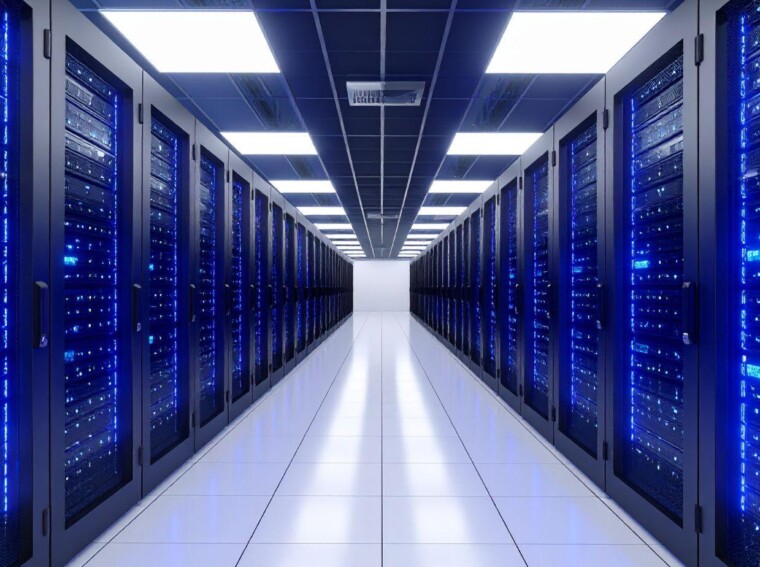
Data storage has evolved from a physical limitation into a critical layer of modern computing. Early systems held small amounts of information and required direct handling. Today, data moves between SSDs, hard drives, tape libraries, edge devices, and cloud platforms.
Modern storage must balance speed, capacity, cost, security, energy use, and accessibility. New technologies rarely make older ones disappear. Each innovation usually adds another layer to the storage ecosystem.
From punch cards to magnetic media
Punch cards were among the earliest ways to store machine-readable instructions and data. They were simple but bulky, slow, and extremely limited in capacity.
Magnetic tape stored far more information in less space and made automated backup and archiving possible. Tape is sequential, so it is not ideal for instant access. However, it remains useful for long-term archives because it combines high capacity, low cost, and the ability to stay offline.
Hard drives and random access
Magnetic disks changed computing by allowing systems to retrieve specific blocks of data without reading everything that came before them.
Hard disk drives, or HDDs, still matter in data centers. Their main advantage is high capacity at a relatively low cost per terabyte. They remain practical for backups, object stores, media libraries, and other large-scale workloads.
Flash storage, SSDs, and NVMe
Solid-state drives transformed storage by replacing moving components with flash memory. SSDs access information much faster than hard drives and are common in laptops, servers, databases, analytics platforms, and high-performance systems.
NVMe pushed performance further. Unlike older interfaces designed around hard-drive behavior, NVMe was built for fast non-volatile memory and parallel workloads. It reduces overhead and lets systems process many operations at once.
Enterprise SSDs can hold huge datasets in a compact form. Organizations choose between SSDs and HDDs based on speed, endurance, power use, rack space, and cost.
Cloud storage changes the model
Cloud storage changed both where information is stored and how organizations pay for it. Instead of buying infrastructure far in advance, businesses can provision capacity on demand and scale it as applications grow.
Object storage became central to this model. It manages data as independent objects with metadata and unique identifiers, making it well suited to images, videos, backups, logs, analytics datasets, and AI training data.
Cloud platforms also offer storage tiers. Frequently accessed information can stay on faster storage, while less active data moves to cheaper options. Lifecycle policies can automate data movement and archiving.
Hybrid, edge, and AI storage
Cloud computing has not eliminated local infrastructure. Many organizations use hybrid architectures that combine private systems, public cloud platforms, and edge locations.
Some data must stay close to users, machines, cameras, or sensors to reduce latency and network traffic. Edge storage is useful for connected devices, industrial systems, streaming, gaming, and other real-time applications.
Latency-sensitive services show why several storage technologies are often used together. A platform ranging from multiplayer games to an online casino games API may need fast access to session information, transaction records, event data, media assets, and historical logs.
A single storage system is rarely ideal for all these tasks. Fast databases can handle active sessions and transactions, caching can support immediate responses, object storage can keep media and logs, while cloud or archival storage can retain historical information.
AI creates similar demands at a larger scale. Modern models need to access huge datasets quickly enough to keep processors busy. This increases demand for high-density flash, fast object storage, and parallel file systems.
Training data, checkpoints, logs, generated content, and older model versions can move between high-performance, capacity-focused, and archival tiers.
Smarter storage and less data movement
Storage innovation is no longer focused only on capacity. Another priority is reducing unnecessary data movement.
Moving huge datasets between storage and processors consumes bandwidth, energy, and time. Zoned storage can improve data placement and reduce unnecessary writes. Computational storage goes further by performing some processing closer to where information is stored.
A device may filter, compress, or transform data locally before sending the result.
DNA storage and quantum memory
Researchers are also exploring technologies beyond conventional electronic media.
DNA storage can encode digital information into molecular sequences. Its theoretical density is extremely high, making it attractive for long-term archives. However, writing and retrieving DNA-based data remains expensive and slow. For now, it is an experimental archival technology rather than a replacement for SSDs, HDDs, or cloud storage.
Quantum memory serves a different purpose. It is designed to preserve quantum states for quantum computers and communication networks, not to replace conventional drives. Ordinary data will continue to rely on classical storage.
Security, data quality, and storage strategy
As storage becomes more distributed, security becomes part of the architecture. Modern strategies can include encryption, access controls, replication, versioning, immutable backups, offline copies, and separate recovery systems.
Immutability can protect critical backups from ransomware, malicious changes, or accidental deletion. Recovery procedures must also be tested.
Data quality matters just as much as capacity. Duplicated files, obsolete records, and poorly classified datasets raise costs and make useful information harder to find. Effective management includes retention policies, metadata, classification, deduplication, archiving, and governance.
The future is a storage hierarchy
The evolution of data storage is not a story in which one technology replaces another. Tape survived hard drives. Hard drives remained relevant after SSDs became widespread. Local infrastructure continued alongside cloud computing.
The modern approach is layered. Flash supports high-performance applications. HDDs provide economical capacity. Object storage handles unstructured data. Cloud platforms offer flexibility. Edge systems reduce latency. Tape remains useful for deep archives and offline protection.
The next major improvement will not be measured only by how many terabytes fit into a device. The most effective systems will place data on the right medium, move it only, when necessary, protect it by design, and balance performance with cost and energy use.
That is the central pattern behind the evolution of data storage technologies: not simply storing more information, but storing it more intelligently.
