
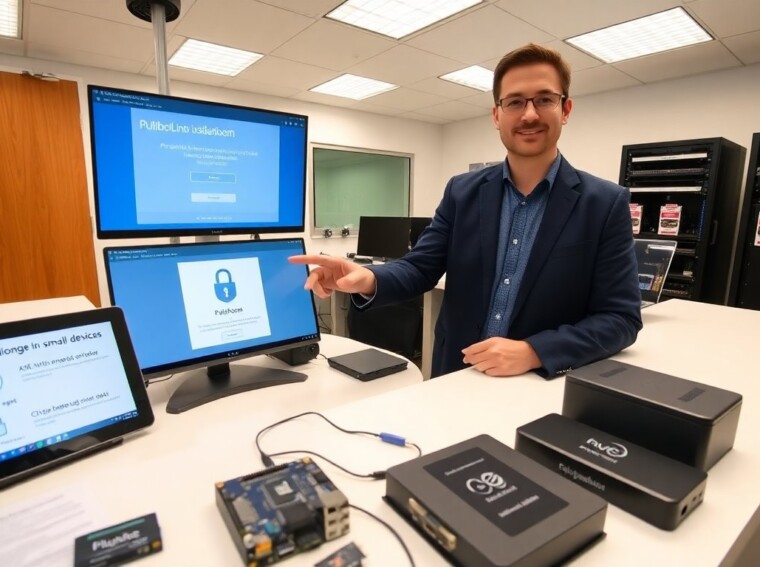
PlugboxLinux targets small devices and constrained hardware. It delivers a lightweight, secure Linux build for embedded systems. This guide explains what PlugboxLinux is, how to install images, and how to manage and secure devices in production. The text uses clear steps and practical advice for engineers and administrators.
Key Takeaways
- PlugboxLinux is a lightweight, secure Linux distribution designed specifically for embedded devices with limited resources.
- Choosing the right PlugboxLinux image and verifying its signature before flashing ensures device stability and security.
- Hardware requirements start at 512 MB RAM and 2 GB flash, with higher specs recommended for container support and added services.
- Secure boot, disk encryption, and hardware-backed keys are essential practices to protect PlugboxLinux devices in production.
- Automating flashing, configuration testing, and monitoring helps maintain a reliable and secure PlugboxLinux deployment.
- Regularly applying security patches and having a robust recovery plan are critical for long-term maintenance and incident response.
What Is PlugboxLinux And Where It Fits In The Linux Ecosystem
PlugboxLinux is a compact Linux distribution for embedded devices. It focuses on small footprint, minimal services, and security hardening. The project uses standard Linux components and selective tooling to reduce attack surface. Developers choose plugboxlinux when they need fast boot, low memory use, and predictable updates. System integrators choose plugboxlinux for appliances, kiosks, and industrial controllers.
Plugboxlinux uses a minimal kernel, a small init system, and a lean package set. The distribution supports common architectures such as ARM and x86. It provides a build system and prebuilt images for quick deployment. The project keeps default services off. This approach reduces runtime risk and simplifies audits.
Plugboxlinux fits between generic desktop distributions and full embedded frameworks. It offers more out-of-the-box security than a stock desktop OS. It also offers more flexibility than a vendor-locked firmware image. Teams can add only the components they need. This setup helps reduce storage needs and update complexity.
Plugboxlinux integrates with common tooling like package managers, container runtimes, and remote management agents. It supports over-the-air updates and signed image verification. The project documents secure defaults and common hardening steps. Engineers can follow those documents to meet compliance or internal policies.
Installing PlugboxLinux: Image Selection, Hardware Requirements, And Flashing Steps
Choosing the right image affects stability and performance. Plugboxlinux offers several image types. The team can pick a full runtime image, a network-boot image, or a minimal installer. They should match the image to the device capabilities and the intended use.
Plugboxlinux images come as compressed archives and as raw flash files. The distribution labels images by architecture and by kernel version. Users must verify image signatures before flashing. Verifying signatures prevents tampered images from running on devices. The project provides public keys and a verification guide.
Flashing steps vary by device but follow a clear pattern. The user downloads the signed image. The user verifies the signature. The user writes the image to media using a verified tool. The user validates the write and reboots the device. The device will boot into plugboxlinux with defaults that aim for security and minimal services.
Hardware Requirements And Best Practices For Flashing Images
Plugboxlinux runs on low-end boards and on more capable systems. The baseline recommendation for a stable install is 512 MB of RAM and 2 GB of flash. For systems that run containers or additional services, the recommendation rises to 1 GB of RAM and 8 GB of flash. The distribution lists supported SoCs and boards in its documentation.
Before flashing, the operator should back up any needed data. The operator should use a reliable power source during flashing. The operator should use ECC-capable storage when the device will store critical logs or databases. The operator should label devices with image version and build date for traceability.
For high volume production, the team should automate flashing with a validated toolchain. They should script signature checks and post-flash configuration. They should run a smoke test after the first boot. The smoke test should validate network, time sync, and a minimal set of services. The test should report results to the build system.
Configuring, Managing, And Securing PlugboxLinux In Production
Plugboxlinux exposes configuration via simple files and a small configuration agent. Teams can use the agent to apply settings at first boot. They can also bake configuration into the image with a build system. This choice lets teams follow immutable infrastructure patterns.
For package management, plugboxlinux supports atomic updates and A/B image schemes. Teams should prefer image-based updates to avoid partial upgrades. The distribution supports signed update payloads. The update server must sign every payload and rotate keys on schedule.
Operators should enable secure boot where hardware supports it. Secure boot prevents unsigned kernels from booting. They should enable disk encryption for devices that store sensitive data. They should use TPM or hardware-backed keys when available. Plugboxlinux includes tooling to provision keys at first run.
Monitoring and logging matter for device health. Teams should forward critical logs to a central server. They should set thresholds for disk use, CPU, and memory. They should alert on failed updates and on repeated service crashes. Plugboxlinux provides hooks for common telemetry agents and supports minimal agents for constrained devices.
Access control must follow least privilege. Administrators should disable root SSH login and use key-based access. They should create a limited account for maintenance tasks. They should audit accounts and remove unused keys. They should rotate keys and certificates on a regular cadence.
The team should automate configuration testing in CI. The tests should validate boot, networking, and the update path. The tests should run on representative hardware or on a reliable emulator. The team should track image versions and deploy only tested builds.
For incident response, the team should prepare a recovery image and a recovery plan. The recovery image should include a minimal shell and network tools. The plan should describe safe rollback steps and contact points. The plan should run in regular drills so teams can act quickly when issues appear.
Security patches matter. The team should subscribe to plugboxlinux security feeds and to upstream kernel advisories. They should prioritize critical fixes and schedule regular patch windows. They should test patches before broad rollout to avoid regressions.
For long-term maintenance, the team should document the device state, installed packages, and the update policy. They should archive build artifacts and signing keys. They should set an end-of-life policy for images and hardware support. This practice helps avoid unmanaged, insecure devices in the fleet.
