
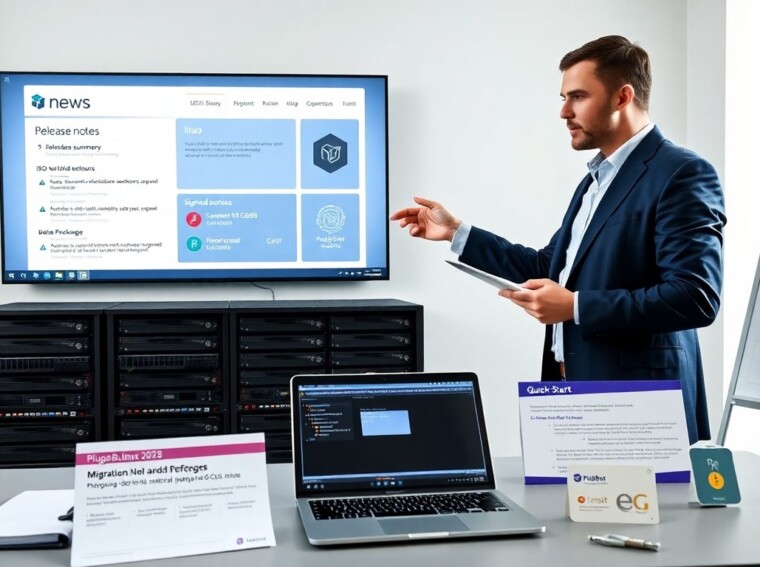
news plugboxlinux arrives in 2026 with focused updates and clear migration paths. This article lists core changes, installation options, and practical use cases. It gives readers direct facts and actionable steps. It avoids jargon and delivers plain guidance for admins, hobbyists, and developers who track news plugboxlinux and plan upgrades.
Key Takeaways
- News PlugBoxLinux 2026 emphasizes stability with focused updates, security patches, and clear migration guides for admins and developers.
- PlugBox Linux remains a lightweight distro ideal for edge devices, small servers, and desktops needing speed and minimal footprint.
- The 2026 release includes security-focused builds, faster boot times, reduced image sizes, and tighter default permissions.
- Installation options include ISO, netinst, and container images with automated and interactive modes, supported by checksums and GPG signatures.
- PlugBox’s key strengths are low-footprint deployments, reproducible signed images, a simple package manager, and clear upgrade and rollback paths.
- The distro suits edge gateways, CI runners, developer workstations, and educational environments seeking minimal maintenance and reliable remote provisioning.
What Is PlugBox Linux? A Quick, Practical Overview
PlugBox Linux is a lightweight Linux distribution. It targets edge devices, small servers, and desktop users who want speed and minimal footprint. The project focuses on a modular package set and predictable updates. The community releases clear images and documentation. In 2026 the project kept its minimal design and added curated optional bundles. Readers who follow news plugboxlinux will find clear release notes, reproducible ISO builds, and an emphasis on stability over feature bloat.
Latest Releases And Notable Updates (2026)
The 2026 cycle for PlugBox Linux produced two point releases and one feature release. The team pushed security-focused builds and refreshed the default package set. The release notes cite faster boot times, reduced image size, and updated tooling. Administrators who watch news plugboxlinux will note tighter default permissions, updated systemd units, and clearer migration scripts. The project also improved its build pipeline for repeatable images and signed artifacts. The community published upgrade guides that match the new file layout and service names.
Security Patches And Kernel Changes
The 2026 updates include backported security patches and a newer long-term kernel. The team applied CVE fixes for common network stacks and filesystem drivers. The kernel update focused on stability and power savings for ARM devices. The maintainers signed each kernel with maintainers’ keys and published clear verification steps. Users who track news plugboxlinux will find step-by-step patch logs and a small list of deprecated drivers that require attention during upgrades.
New Applications, Bundled Tools, And UX Improvements
PlugBox added a compact package of utilities aimed at developers and IoT use. The bundle includes a modern shell, lightweight container runtime, and an updated package manager with delta updates. The graphical installer gained a progress bar and clearer partition options. The default desktop session tightened focus on keyboard workflows and included a minimal compositor. People following news plugboxlinux will see the project favor tools that reduce boot time and ease remote management.
System Requirements And Installation Options
PlugBox Linux runs on x86_64 and ARM64. It needs 1 GB of RAM for basic operation and 4 GB for heavier tasks. Storage needs start at 4 GB for ISO installs and 8 GB for persistent setups. The distro supports UEFI and legacy BIOS. Network install works over HTTP and HTTPS. The docs list recommended CPU profiles for container hosts and single-board computers. Those who read news plugboxlinux will find a compact hardware matrix and a clear note on power and thermal requirements for ARM SBCs.
Installation Methods: ISO, Netinst, And Container Images
PlugBox supplies three main installation images. The full ISO installs a desktop and optional server roles. The netinst image downloads only required packages and suits low-bandwidth environments. The container images target CI pipelines and cloud deployment. Installers include an automated mode and an interactive mode. Each image ships with checksums and GPG signatures. Users who follow news plugboxlinux will find scripted examples for unattended installs and container deployment on popular registries.
Key Features, Typical Use Cases, And Where PlugBox Excels
PlugBox excels at low-footprint deployments and repeatable builds. It offers a small base system, signed images, and a simple package manager. Typical use cases include edge gateways, CI runners, and developer workstations that need speed and clarity. The distro works well for schools and labs where admins prefer minimal maintenance. The project provides clear upgrade paths and rollback options. Readers who monitor news plugboxlinux will see steady improvements in automation, image signing, and tooling for remote provisioning.
